Five Roof Warning Signs You Shouldn't Ignore
Most roof failures start quiet. By the time water is on your ceiling, you're already looking at interior repairs. These are the signals to catch early.
We get calls from Ocean and Monmouth County homeowners every week who say some version of "it was fine and then suddenly there was a stain on the ceiling." The roof wasn't actually fine. It was giving signals. They were just the kind of signals you have to be looking for.
Here are the five we see most. If you can spot two or more on your own house, schedule an inspection before the next storm.
1. Granules in the gutters
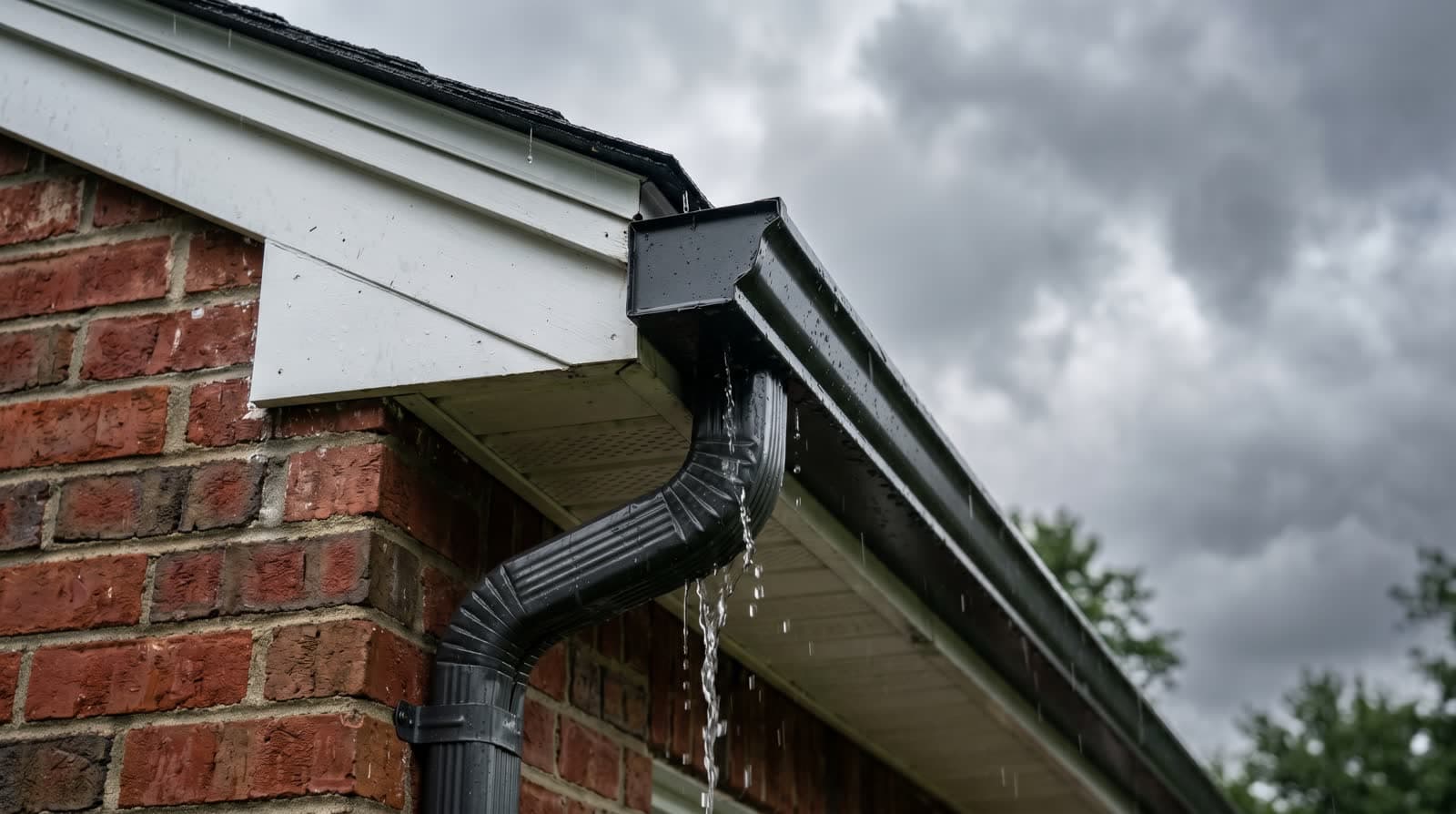
Asphalt shingles are protected by a layer of ceramic granules embedded in the asphalt. As the roof ages, or as storms hammer it, granules shed. You find them in the gutter trough when you clean it out, or in a pile at the base of your downspout after heavy rain.
A little shedding on a new roof is normal. A pile after every rain means the shingles are losing their UV protection and the asphalt is about to start cracking. That's the tipping point. On a 15+ year roof, this is the single most common early warning of end-of-life.
2. Shingles that look dark or wet after a dry spell
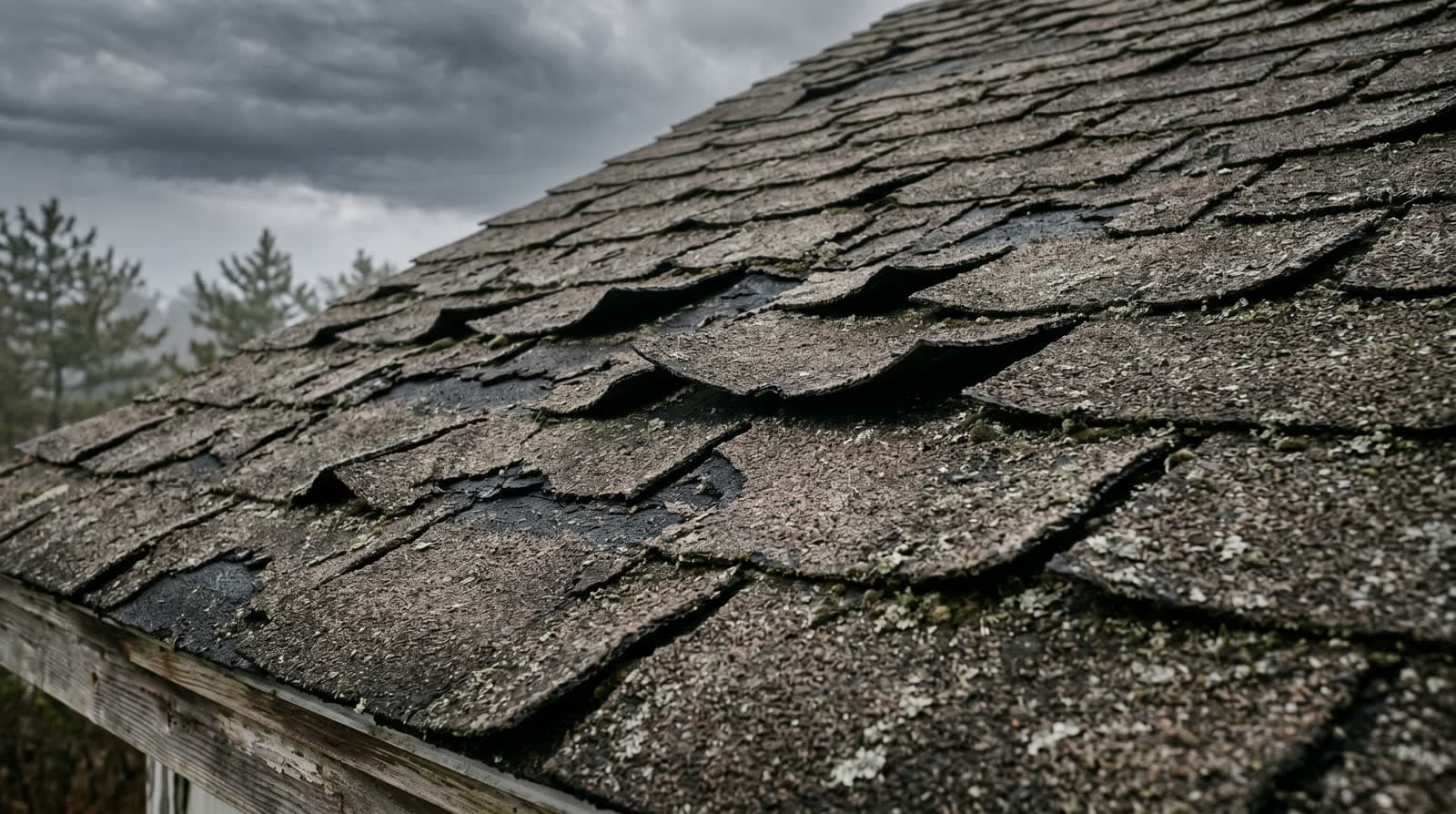
Stand across the street and look at your roof on a sunny afternoon. Do you see patches that look darker than the surrounding field? Those are spots where the granules are gone and the asphalt is exposed. That section of roof is absorbing water and baking in UV at the same time. It'll be the first to fail.
3. Missing, lifted, or curled shingles
After Jersey Shore wind events, and we get them, walk around the house and look up. Any shingle that's cupped, curling at the corners, or outright missing is a path for water. Old shingles lose the mastic seal that bonds each row to the next. Once they lift, wind gets underneath and peels them back further every storm.
A handful of lifted shingles on an otherwise sound roof is a repair. A field where most shingles are curling is a replacement conversation.
4. Stains on the ceiling or upstairs walls
If you see a brown ring on a ceiling, that water has already traveled. It came through the deck, across the attic floor, down a joist, and finally dropped through the drywall. By the time you see the stain, the leak's been active for days or weeks and there's insulation damage above.
Don't paint over it. Find the leak first. In a storm? Put a bucket under it and call us. In a dry spell, still call. A dry stain means the leak is hidden but the water is in there somewhere.
5. Sagging or uneven roof line
Stand at the curb and look at your ridge line, the top of the roof. It should be dead straight. If you see a dip, a bow, or any unevenness, the sheathing underneath is soft. That's structural. It's gone past a roofing problem and into a framing problem.
A sagging roof usually means long-term moisture has rotted the plywood deck, or in older homes, the rafters are undersized for modern snow loads. Either way, this isn't a call you put off.
The common thread
Every one of these warning signs is cheaper to fix early than late. A targeted repair that runs $400 in April becomes a $12,000 replacement plus $3,000 in drywall work in September after a hurricane remnant drops four inches on your roof in one night.
If you're not sure what you're looking at, we do free inspections across Ocean and Monmouth County. We bring a camera, we walk the roof, and we send you a photo report with findings. No sales pitch, no upsell.